 Fernbrook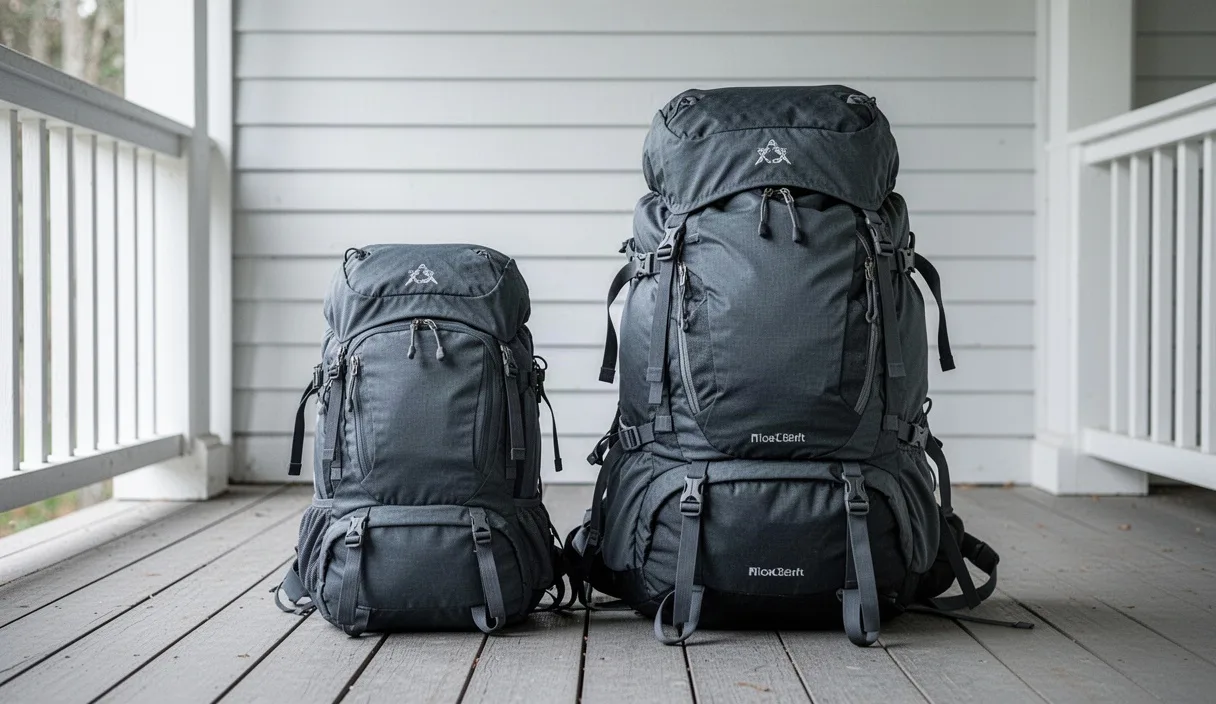

Somewhere around the 20-liter mark, a backpack stops being a bag with straps and becomes a piece of load-bearing equipment. Below that threshold, manufacturers can get away with a foam pad, two straps, and a zipper. Above it, the physics of carrying weight for more than a few hours start to matter, and the design choices reflect that shift in ways that are easy to miss if you are simply comparing price tags or color options.
This matters practically because a lot of buyers assume capacity is the only variable that changes as packs get larger, when in fact the entire construction logic changes. A 35-liter pack built like an oversized daypack will hurt on a three-day trip in ways that a properly framed 35-liter pack will not. Understanding what actually changes above 20 liters, rather than just how much bigger the number on the label is, makes the difference between a pack that disappears on your back and one you are constantly adjusting.
Volume Thresholds That Change Pack Design
Pack volume is not a smooth continuum where every liter adds the same kind of feature. There are rough thresholds where the internal architecture shifts. Below roughly 20 liters, most packs are built as simple sacks: a single main compartment, light shoulder straps, and minimal or no frame. This works because the total carried weight rarely exceeds 4 to 6 kilograms, which the shoulders alone can manage for a few hours without significant discomfort.
Between 20 and 35 liters, manufacturers start introducing structure: a foam back panel, sometimes a single stay, and a hip belt that is more decorative than functional. This is the transition zone, and it is also where the most inconsistent products exist, since a brand can call something a "daypack" or a "light overnight pack" at the same volume and build it very differently.
Above 35 liters, and especially past 45, packs are almost universally designed as load-carrying systems: internal or external frames, structured hip belts, adjustable torso lengths, and compression straps that manage volume as much as weight. The reason is straightforward. A pack in this range is commonly loaded to 10 to 18 kilograms for multi-day trips, and at that weight, the shoulders alone cannot do the job without causing fatigue or nerve compression within an hour or two.
- Under 20L: shoulder-carried, minimal frame, typically under 6 kg loaded.
- 20-35L: transitional, partial frame, hip belt often cosmetic, 6-10 kg loaded.
- 35L and above: full frame systems, structural hip belts, 10-18+ kg loaded.
Frame Construction and Weight Distribution
A daypack's "frame," if it has one at all, is usually a single plastic sheet or a light foam panel meant to keep the pack from collapsing against your back. It does not transfer weight anywhere; it simply maintains shape. Overnight and multi-day packs use one of two frame types: an internal frame built from aluminum stays or a molded plastic frame sheet, or an external frame, which is less common now but still used in some hauling-specific packs.
Internal frame stays, typically two parallel aluminum bars running vertically along the back panel, are shaped to follow the curve of the spine and then bolted or slotted into the hip belt. This is the mechanism that allows weight to move off the shoulders and onto the hips and legs, which are far better suited to carrying sustained load. Without stays, or with stays that are too short or poorly shaped, a heavy pack will pull backward at the shoulders no matter how padded the straps are.
Torso length adjustment becomes relevant here too. Daypacks are usually sold in one size because the load is light enough that fit tolerance is wide. Overnight packs above 35 liters commonly offer adjustable torso length, sometimes in increments as small as 2.5 centimeters, because a frame that sits even 3 to 4 centimeters too high or low on the back will misdirect weight regardless of how good the materials are. A pack that fits a 45-centimeter torso worn by someone with a 50-centimeter torso will ride high and dig into the lower ribs within the first hour of walking.
Hip Belt and Load Transfer Above 20 Liters
The hip belt is arguably the single component that separates a daypack from an overnight pack more than any other feature. On packs under 20 liters, hip belts, when present, are thin webbing straps meant to stop the pack from bouncing, not to bear weight. They are typically 2.5 to 4 centimeters wide and unpadded.
On packs designed for loads above 10 kilograms, the hip belt is a structural element, usually 10 to 15 centimeters wide at the point where it wraps the iliac crest, padded with dual-density foam, and connected directly to the frame stays rather than just the fabric body of the pack. A properly fitted structural hip belt should carry 70 to 80 percent of the total pack weight, leaving the shoulder straps mainly to stabilize rather than support.
Fit here is not optional. The belt needs to sit directly on top of the hip bones, not above them on the waist and not below them sagging toward the thighs. A common error, discussed further below, is buying a pack based on torso measurement alone and ignoring hip belt sizing, which is usually offered in separate small, medium, and large options on packs from brands like Osprey, Gregory, or Deuter. A hip belt that is too large will not stay in place under load and will slowly slide down over a few hours of walking, which shifts weight back onto the shoulders exactly where you did not want it.
Access Points: Top-Loading vs Panel-Loading
Daypacks are almost always top-loading through a single zippered opening or drawstring closure, sometimes with a smaller front pocket for quick-access items. This works fine because the contents are limited and the trip is short enough that repacking is rarely necessary during the day.
Overnight and multi-day packs split into two camps. Top-loading packs, closed with a drawstring collar and a floating lid, are lighter and simpler but require unpacking from the top down to reach anything buried near the bottom, such as a sleeping bag. Panel-loading packs, which open via a U-shaped zipper across the front face, allow access to the entire main compartment at once, similar to a suitcase.
The practical trade-off is weight versus convenience. A top-loading 50-liter pack might weigh 200 to 300 grams less than an equivalent panel-loading model because it avoids the long zipper and reinforcement needed around a large opening. For a three-night trip where you are packing and unpacking the full bag once or twice a day, that convenience is often worth the weight. For a thru-hike where you are living out of side pockets and a top lid for days at a time, the lighter top-loading design tends to win out.
| Feature | Daypack (under 20L) | Overnight pack (35L+) |
|---|---|---|
| Frame | None or single foam sheet | Aluminum stays or molded frame sheet |
| Hip belt width | 2.5-4 cm, unpadded | 10-15 cm, padded, structural |
| Access | Single top zipper | Top-loading or panel-loading |
| Torso adjustment | Fixed, one size | Adjustable, often in 2.5 cm increments |
| Typical loaded weight | Under 6 kg | 10-18 kg |
Ventilation and Back Panel Differences
Back panel ventilation matters more as pack size and worn duration increase, simply because a pack in contact with your back for eight hours generates more accumulated sweat than one worn for ninety minutes. Daypacks typically use a solid foam panel pressed directly against the back, which is comfortable enough for short outings but traps heat quickly.
Larger packs frequently use a trampoline-style mesh back panel, where the fabric is suspended a few centimeters off the frame, allowing air to move behind the back rather than against it. Osprey's AntiGravity line and similar systems from other brands are built specifically around this idea. The trade-off is that suspended mesh panels sit the pack's center of mass slightly farther from the body, which can make heavy loads feel marginally less stable on technical terrain, a small but real compromise between comfort and control.
Some overnight packs split the difference with a channeled foam design, cutting grooves into a contact-style panel to allow limited airflow while keeping the load closer to the back. This tends to suit loads above 15 kilograms better than full mesh suspension, since stability becomes more important than ventilation once weight climbs that high.
Matching Capacity to Trip Length
Capacity should be chosen based on nights out and season, not aspiration. As a rough guide, day trips call for 10 to 20 liters, one to two nights with a lightweight setup call for 30 to 45 liters, three to five nights or colder-weather gear call for 45 to 65 liters, and anything beyond that, or winter mountaineering with bulky insulation, tends to push toward 65 to 80 liters.
Buying larger "just in case" is a common instinct that backfires. An oversized pack encourages overpacking, since empty space gets filled regardless of necessity, and a half-empty large pack rides poorly because the frame and hip belt are calibrated for a fuller, heavier load. A 65-liter pack carrying 8 kilograms will often feel less stable than a properly sized 35-liter pack carrying the same weight, because the frame and belt are not doing the job they were built for.
Common mistakes
- Choosing pack size by the number on the label rather than by torso length and hip measurement, which vary independently of overall pack volume.
- Assuming a hip belt is functional simply because it exists; on many packs under 30 liters it is stabilizing webbing, not a load-bearing structure.
- Overloading a frameless or lightly framed pack past 8 to 10 kilograms, which shifts strain onto the shoulders and upper back rather than the hips.
- Buying a larger pack than needed on the assumption that extra room is harmless; it usually leads to overpacking and poor load stability.
- Ignoring torso length adjustment, which matters more for comfort over multiple days than most other individual features combined.
Next steps
If you are deciding between a daypack and an overnight pack, start by measuring your torso length from the C7 vertebra at the base of your neck to the point level with your iliac crest, since most manufacturer sizing charts use this figure rather than height. Try the pack loaded, not empty, ideally with 8 to 10 kilograms for a mid-size pack or 12 to 15 for anything above 50 liters, and walk for at least ten minutes in-store or during a return-eligible trial period before committing. If you have a history of back, shoulder, or hip issues, a brief consultation with a physical therapist or an experienced outfitter about load limits and belt fit is a reasonable precaution before carrying weight for multiple days in a row.